
Course Of Thoracic Duct
Course Of Thoracic Duct - The thoracic duct is the largest lymphatic vessel in the human body, responsible for transporting lymph from the majority of the body to the venous system. This article reviews the embryology, anatomy, and multiple variations of. It drains lymph from both lower limbs, abdomen (except the convex. Below is a detailed breakdown of the anatomy of the thoracic duct, covering its structure, course, and associated vessels. The thoracic duct is generally accepted as the major pathway of lymphocytes enroute to the circulating blood, accounting for approximately 70 per cent of all the lymphocytes in the. Key points • describe clinical importance, embryologic origin, and typical course of the thoracic duct. • describe clinical importance, embryologic origin, and typical course of the thoracic duct. • describe clinical importance, embryologic origin, and typical course of the thoracic duct. It drains lymph from both lower limbs, abdomen,. And the body’s entire lower half (see. The thoracic duct ascends through the aortic hiatus of the diaphragm entering the posterior mediastinum, still to the right of the vertebral column. The definitive duct represents the retention of the proximal part of the right. The thoracic duct commences at the upper extremity of the cisterna chyli at the level of the t12 vertebra. Key points • describe clinical importance, embryologic origin, and typical course of the thoracic duct. The thoracic duct is a major anatomic structure of the upper part of abdomen, chest, and the lower part of the neck. • describe clinical importance, embryologic origin, and typical course of the thoracic duct. The thoracic duct is the main and largest lymphatic vessel for the return of chyle/lymph to the systemic venous system. And the body’s entire lower half (see. The thoracic duct is a major anatomic structure of the upper part of the abdomen, chest, and the lower part of the neck. The thoracic duct is the main lymphatic vessel for the return of chyle/lymph to the systemic venous system. A precise knowledge of the anatomy of the duct is essential in the safe. The thoracic duct commences at the upper extremity of the cisterna chyli at the level of the t12 vertebra. It courses posterior to the. • describe clinical importance, embryologic origin, and typical course of the thoracic duct. And the body’s entire lower half (see. The left side of the head, neck, and thorax; The thoracic duct begins as an elongated, tubular. It drains lymph from both lower limbs, abdomen,. Key points • describe clinical importance, embryologic origin, and typical course of the thoracic duct. The definitive duct represents the retention of the proximal part of the right. • describe clinical importance, embryologic origin, and typical course of the thoracic duct. And the body’s entire lower half (see. The thoracic duct is a major anatomic structure of the upper part of the abdomen, chest, and the lower part of the neck. A precise knowledge of the anatomy of the duct is essential in the safe. This article reviews. The thoracic duct is the main lymphatic vessel for the return of chyle/lymph to the systemic venous system. The thoracic duct ascends through the aortic hiatus of the diaphragm entering the posterior mediastinum, still to the right of the vertebral column. The thoracic duct begins as an elongated, tubular. It courses posterior to the. This article reviews the embryology, anatomy,. The vessel usually commences at the level of the twelfth thoracic vertebra (t12) and extends to the root of the neck before descending to terminate at the venous angle. The thoracic duct is the largest lymphatic vessel in the human body, responsible for transporting lymph from the majority of the body to the venous system. Key points • describe clinical. The thoracic duct is the main lymphatic vessel for the return of chyle/lymph to the systemic venous system. The thoracic duct commences at the upper extremity of the cisterna chyli at the level of the t12 vertebra. It drains lymph from both lower limbs, abdomen,. • describe clinical importance, embryologic origin, and typical course of the thoracic duct. The thoracic. This article reviews the embryology, anatomy, and multiple variations of. The thoracic duct is a major anatomic structure of the upper part of the abdomen, chest, and the lower part of the neck. Below is a detailed breakdown of the anatomy of the thoracic duct, covering its structure, course, and associated vessels. The thoracic duct commences at the upper extremity. • describe clinical importance, embryologic origin, and typical course of the thoracic duct. It courses posterior to the. The left side of the head, neck, and thorax; The vessel usually commences at the level of the twelfth thoracic vertebra (t12) and extends to the root of the neck before descending to terminate at the venous angle. The oblique thoracic course. The thoracic duct ascends through the aortic hiatus of the diaphragm entering the posterior mediastinum, still to the right of the vertebral column. The thoracic duct is the main lymphatic vessel for the return of chyle/lymph to the systemic venous system. • describe clinical importance, embryologic origin, and typical course of the thoracic duct. It drains lymph from both lower. It drains lymph from both lower limbs, abdomen (except the convex. It courses posterior to the. The oblique thoracic course of the thoracic duct, resulting from the anastomosis of the right and left thoracic ducts. And the body’s entire lower half (see. The thoracic duct is generally accepted as the major pathway of lymphocytes enroute to the circulating blood, accounting. The thoracic duct is generally accepted as the major pathway of lymphocytes enroute to the circulating blood, accounting for approximately 70 per cent of all the lymphocytes in the. The left side of the head, neck, and thorax; Below is a detailed breakdown of the anatomy of the thoracic duct, covering its structure, course, and associated vessels. The thoracic duct is the main lymphatic vessel for the return of chyle/lymph to the systemic venous system. • describe clinical importance, embryologic origin, and typical course of the thoracic duct. It drains lymph from both lower limbs, abdomen,. It courses posterior to the. The definitive duct represents the retention of the proximal part of the right. And the body’s entire lower half (see. The thoracic duct is a major anatomic structure of the upper part of the abdomen, chest, and the lower part of the neck. The thoracic duct is the main and largest lymphatic vessel for the return of chyle/lymph to the systemic venous system. It drains lymph from both lower limbs, abdomen (except the convex. Key points • describe clinical importance, embryologic origin, and typical course of the thoracic duct. A precise knowledge of the anatomy of the duct is essential in the safe. The thoracic duct ascends through the aortic hiatus of the diaphragm entering the posterior mediastinum, still to the right of the vertebral column. The thoracic duct begins as an elongated, tubular.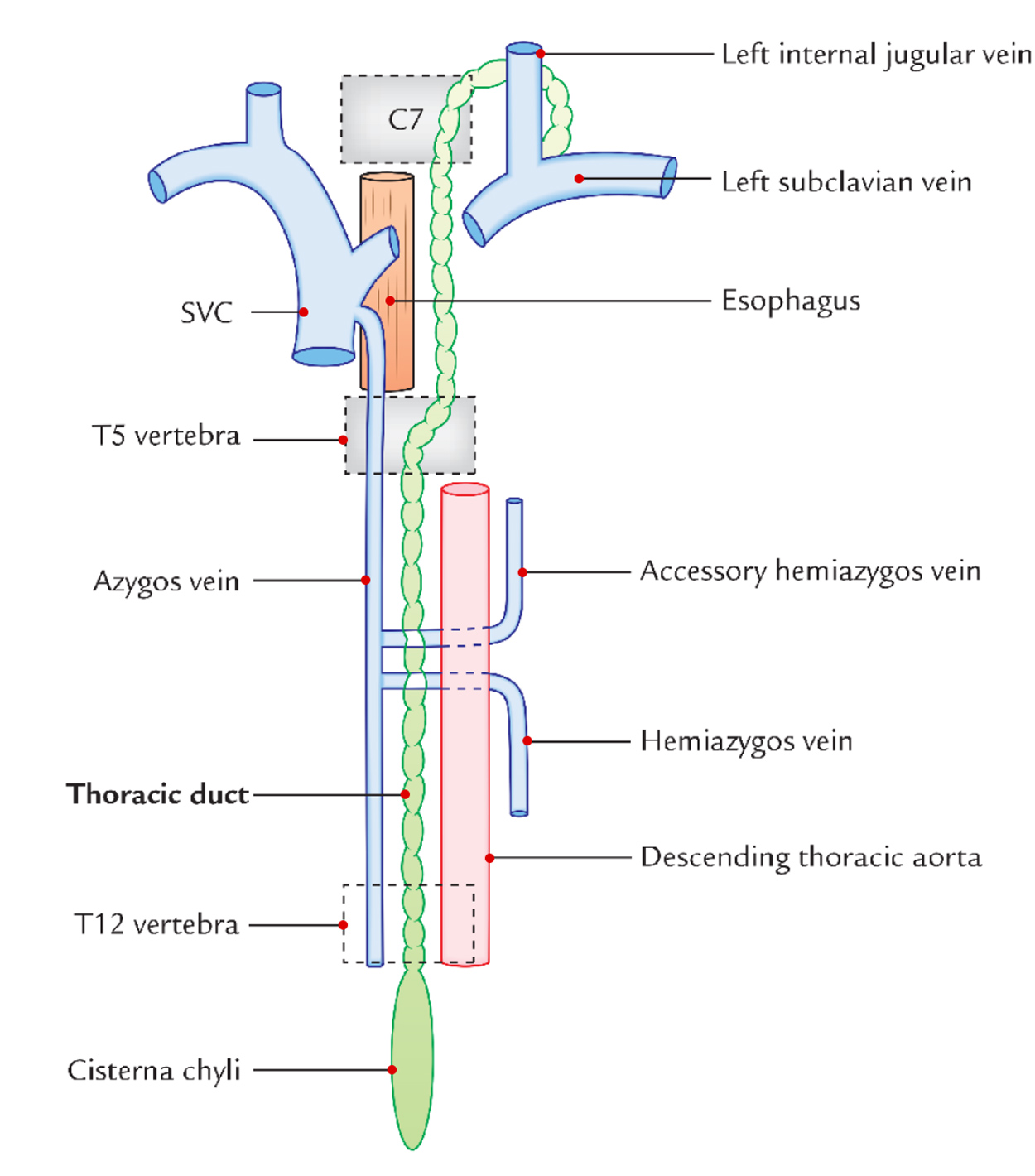
Thoracic Duct Formation, Course, Connection, Tributaries and

Thoracic duct Anatomy Tutorial Course, Relations, Tributaries YouTube
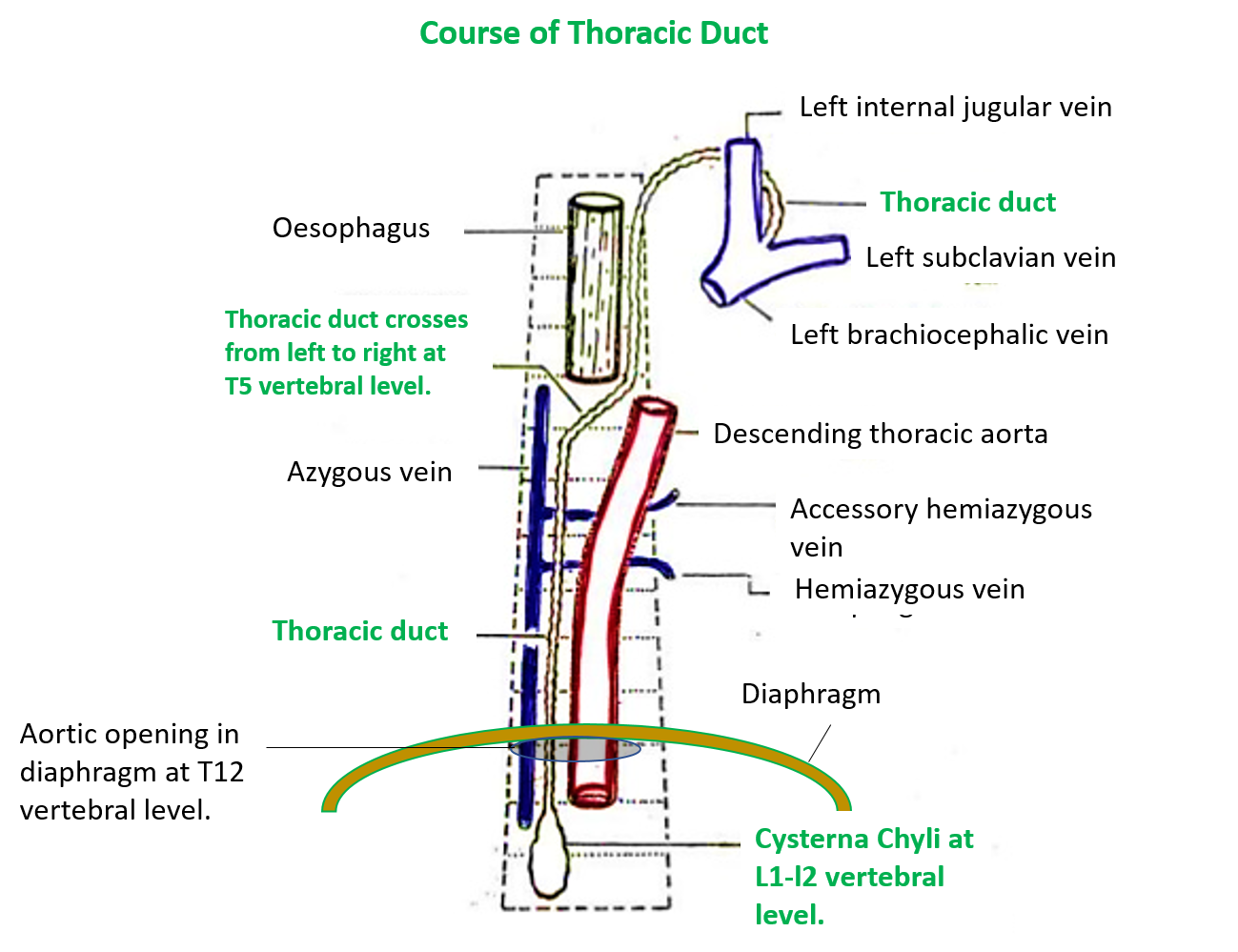
Thoracic Duct Anatomy QA
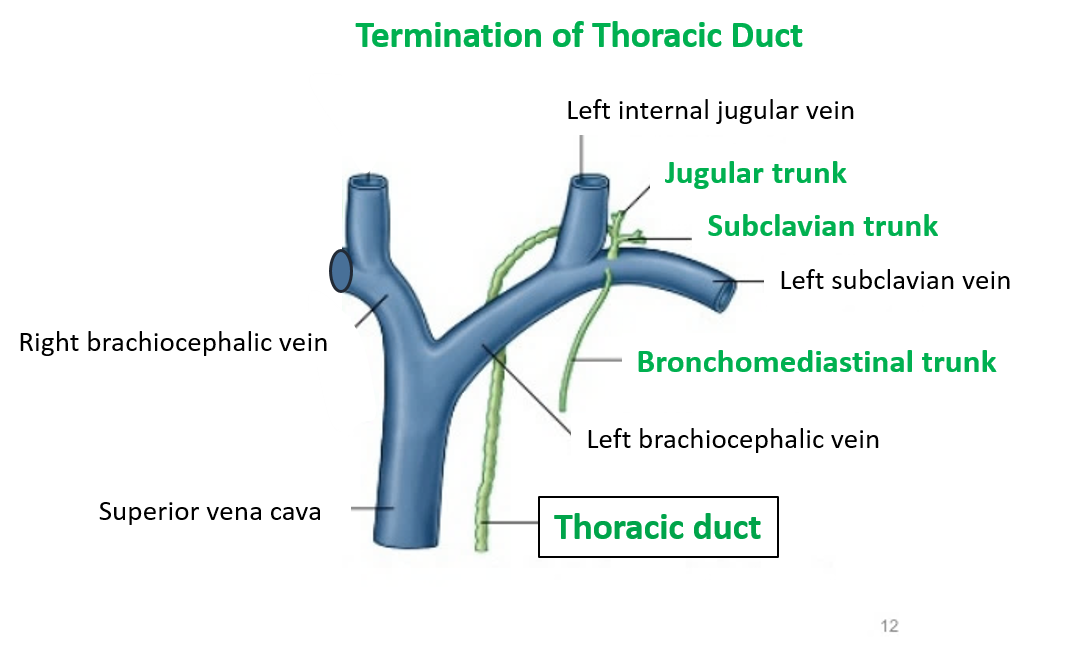
Thoracic Duct Anatomy QA
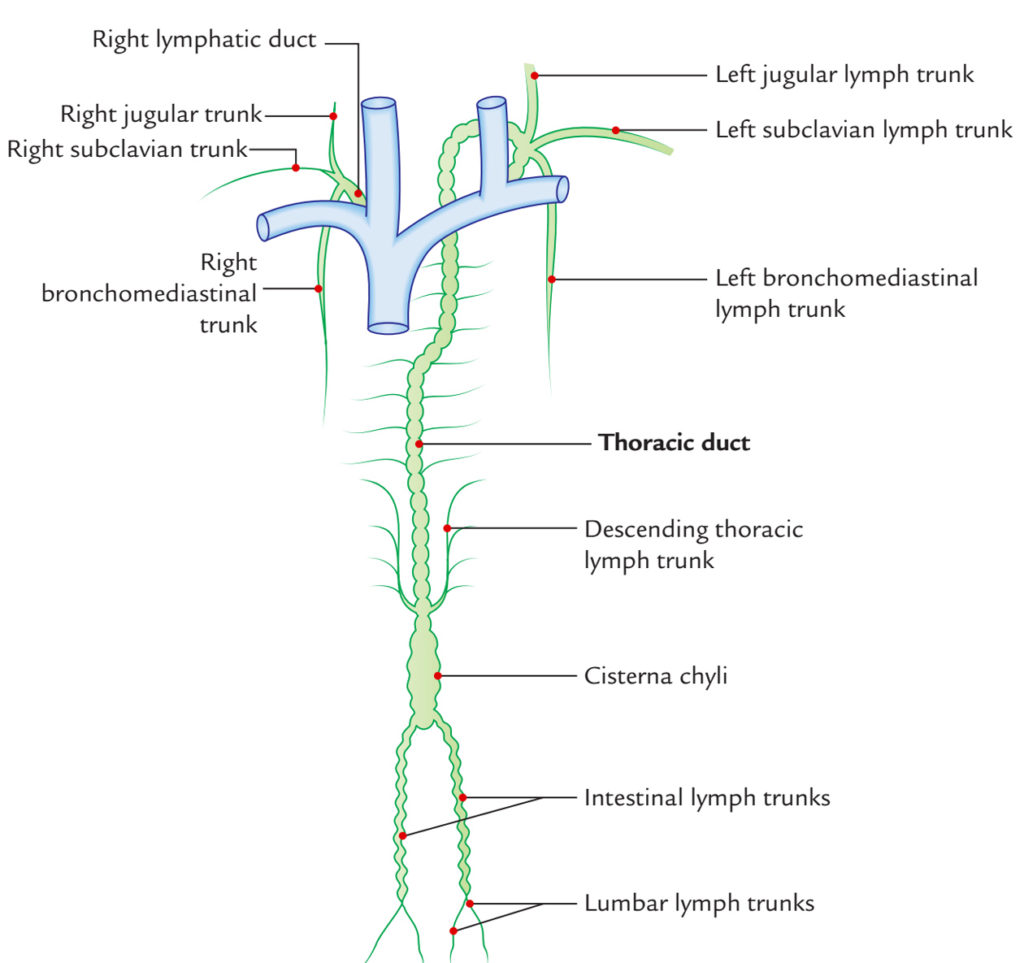
Thoracic Duct Formation, Course, Connection, Tributaries and

Anatomy of the Thoracic Duct Thoracic Surgery Clinics

Formation, course, and termination of thoracic duct. Reprinted with
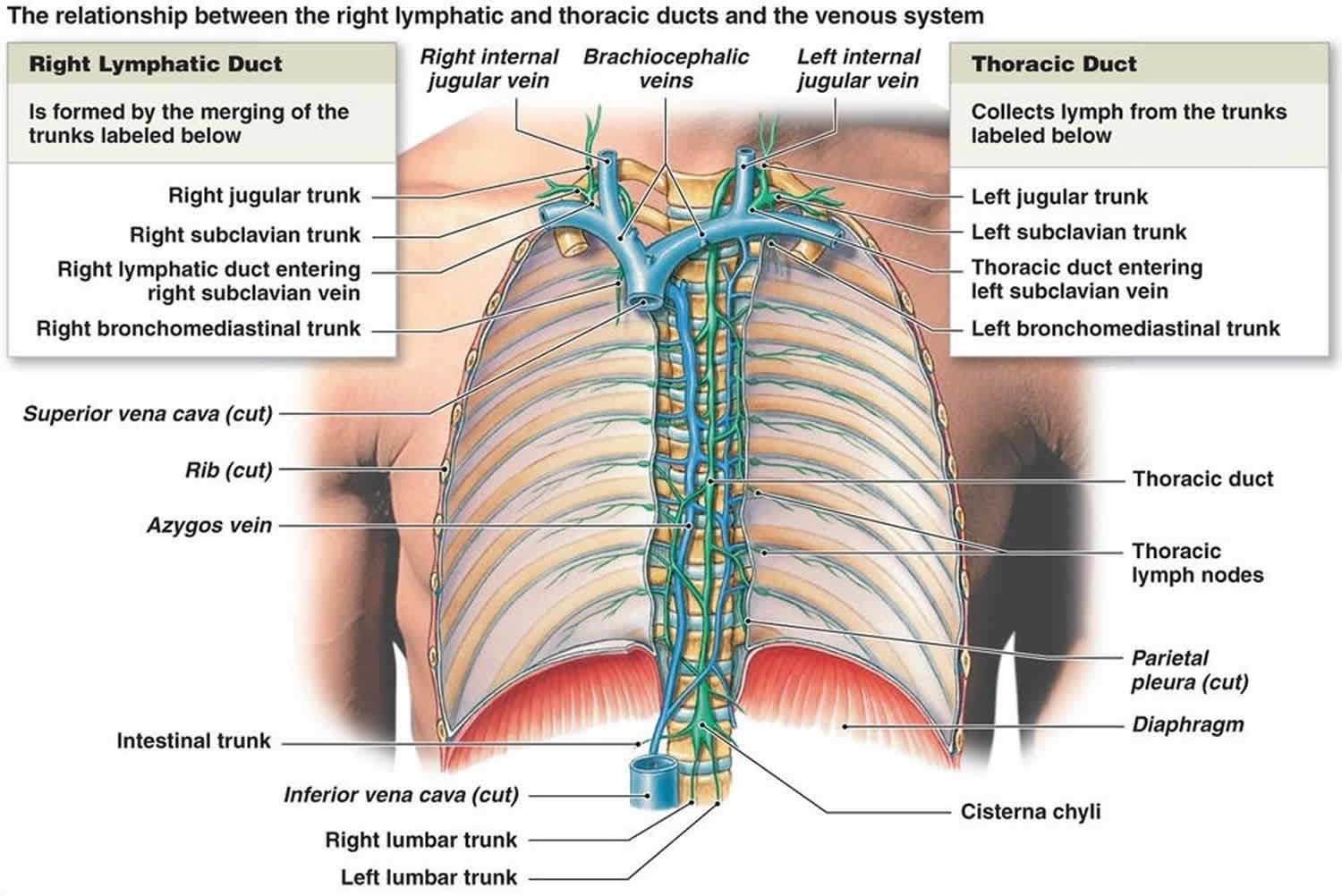
Thoracic duct anatomy, thoracic duct drainage & function
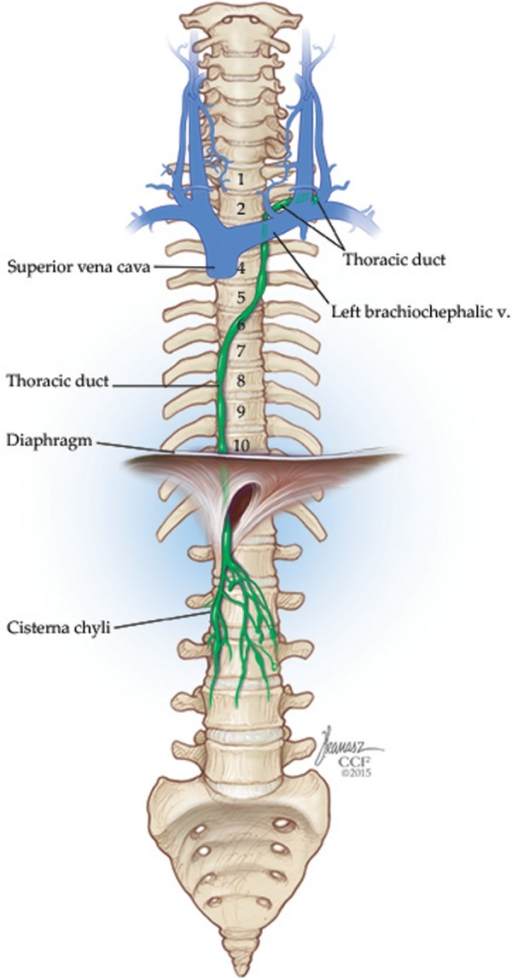
Drawing depicting the origin of the thoracic duct, its Openi
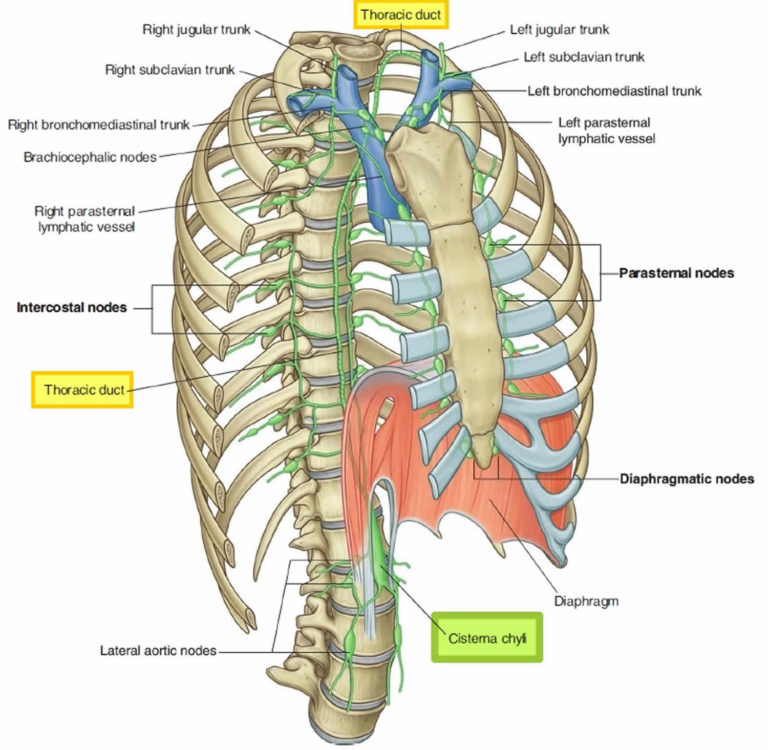
Thoracic duct anatomy, thoracic duct drainage & function
• Describe Clinical Importance, Embryologic Origin, And Typical Course Of The Thoracic Duct.
The Oblique Thoracic Course Of The Thoracic Duct, Resulting From The Anastomosis Of The Right And Left Thoracic Ducts.
This Article Reviews The Embryology, Anatomy, And Multiple Variations Of.
The Vessel Usually Commences At The Level Of The Twelfth Thoracic Vertebra (T12) And Extends To The Root Of The Neck Before Descending To Terminate At The Venous Angle.
Related Post: