
Of Course Yes In French
Of Course Yes In French - A simple “oui” is the most standard, basic, and neutral affirmative reply in french. But if you’re really looking to show your enthusiasm, you can opt for the stronger bien sûr que oui. Cert aines de ses pratiques, oui, bien entendu. In this case, both the formal and casual translations are the same because the phrase yes of course is a simple and neutral expression that can be used in both formal and casual contexts without any significant change in tone or register. Let’s cut to the chase. It’s most commonly used in response to a question or statement. In short, knowing different ways to say ‘yes’ in french really helps you get better at the language and understand the culture. Read on to find out more about how to say “yes” in french, including. How do you say “yes” in french? The french language has more than just “oui” to say “yes.” phrases like “bien sûr” mean “of course” and show you’re sure or certain. In short, knowing different ways to say ‘yes’ in french really helps you get better at the language and understand the culture. Respect to certain of its practi ces, yes, of course. To say “yes” in french, you can simply say, “oui,” which is pronounced as “wee.” if someone is offering you something, try saying, “oui, merci,” or “yes, thanks.” for a more casual way to say, “yes,” say, “ouais,” which is similar to saying, “yeah,” in english. A simple “oui” is the most standard, basic, and neutral affirmative reply in french. Bien sûr “absolutely” in french: Au poste », ajoute mme graham. French offers several ways to say “of course,” depending on the situation. Learning how to say yes in french is one of the first few lessons when studying the language. The french language has more than just “oui” to say “yes.” phrases like “bien sûr” mean “of course” and show you’re sure or certain. Yes of course, you want somebody with skills and qualifications, but when you hire, you're looking for a fit, graham adds. You can now learn french, japanese, mandarin, and more in your own language, which means no more struggling with confusing translations. Let’s take a look at an impressive 28 different ways to say “yes” in french! “of course it’s you/it’s you, of course!” = “c’est toi, évidemment!” and it works well to express frustration: French offers several ways to say. We’ve looked at 33 unique expressions, covering everything from casual to formal ways to agree. Use it to show your sincerity or just how strong your emotions are. Learning how to say yes in french is one of the first few lessons when studying the language. However, if you read or listen to a lot of french, you’ll notice that. (can you help me with this task?) “ oui, bien sûr, je suis là pour vous aider.” (yes, of course, i am here to help you.) French offers several ways to say “of course,” depending on the situation. D’accord or ok (pronounced oké) “of course” in french: Do the french always say “yes”? Bien sûr “absolutely” in french: Here are 25 common ways to say “of course” in french, with pronunciation, meanings, and example sentences. Do the french always say “yes”? To say “yes” in french, you can simply say, “oui,” which is pronounced as “wee.” if someone is offering you something, try saying, “oui, merci,” or “yes, thanks.” for a more casual way to say, “yes,” say,. In short, knowing different ways to say ‘yes’ in french really helps you get better at the language and understand the culture. “i spilled red wine all over the rug again of course!” = “j’ai encore renversé du vin rouge sur le tapis évidemment,” French offers several ways to say “of course,” depending on the situation. Au poste », ajoute. “of course it’s you/it’s you, of course!” = “c’est toi, évidemment!” and it works well to express frustration: Do the french always say “yes”? Learning how to say yes in french is one of the first few lessons when studying the language. Learn how to say, spell, and pronounce the french words for “ok,” “of course,” “yeah,” “yes,” and more. Use it to show your sincerity or just how strong your emotions are. You can now learn french, japanese, mandarin, and more in your own language, which means no more struggling with confusing translations. “i spilled red wine all over the rug again of course!” = “j’ai encore renversé du vin rouge sur le tapis évidemment,” How do you say. “i spilled red wine all over the rug again of course!” = “j’ai encore renversé du vin rouge sur le tapis évidemment,” It’s neither formal or informal, it can be used in pretty much any occasion to answer in the affirmative. “d’accord” means “ok” and shows you agree or accept something. Here are 5 ways to say it. Cert aines. However, if you read or listen to a lot of french, you’ll notice that the french don’t always respond with “oui” when asked a question. It’s neither formal or informal, it can be used in pretty much any occasion to answer in the affirmative. “d’accord” means “ok” and shows you agree or accept something. Here are 25 common ways to. Some expressions are formal, while others are casual. But if you’re really looking to show your enthusiasm, you can opt for the stronger bien sûr que oui. Oui has a long and fascinating history, and is the winner of a. Let’s cut to the chase. In this case, both the formal and casual translations are the same because the phrase. Here are 5 ways to say it. Yes of course, you want somebody with skills and qualifications, but when you hire, you're looking for a fit, graham adds. The french language has more than just “oui” to say “yes.” phrases like “bien sûr” mean “of course” and show you’re sure or certain. This one’s nice and simple: Read on to find out more about how to say “yes” in french, including. To say “yes” in french, you can simply say, “oui,” which is pronounced as “wee.” if someone is offering you something, try saying, “oui, merci,” or “yes, thanks.” for a more casual way to say, “yes,” say, “ouais,” which is similar to saying, “yeah,” in english. Instead, they might say something like “of course,” “yup,” or “maybe,” or phrases like “of course,” or “i agree”. “d’accord” means “ok” and shows you agree or accept something. Let’s talk about the expansion, because it’s kind of a big deal. Cert aines de ses pratiques, oui, bien entendu. “i spilled red wine all over the rug again of course!” = “j’ai encore renversé du vin rouge sur le tapis évidemment,” In this case, both the formal and casual translations are the same because the phrase yes of course is a simple and neutral expression that can be used in both formal and casual contexts without any significant change in tone or register. Bien sûr is how you say of course in french. Bien sûr “absolutely” in french: When you want to say of course, the french expression you usually need is bien sûr. “of course” just happens to be such an expression that you can use to not only say yes, but also put some enthusiasm behind it.
17 Ways to Say "Yes" in French

33 Unique Ways To Say “Yes” In French A Quick Guide

Learn French How to Say "Of Course" in French Learn French Language
33 Ways to Say Yes in French French Learner

Ways to say yes in French French language lessons, French lessons

How To Ask a YesNo Question In French // French Grammar Course
How to Say "Yes" in French French Lessons YouTube
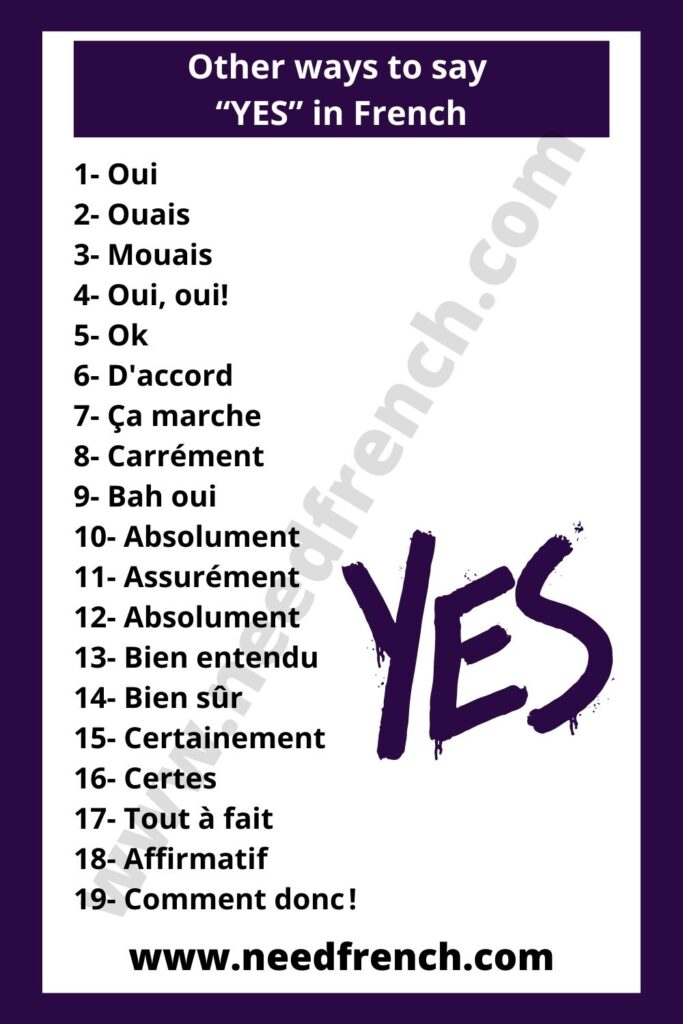
Business French Vocabulary NeedFrench
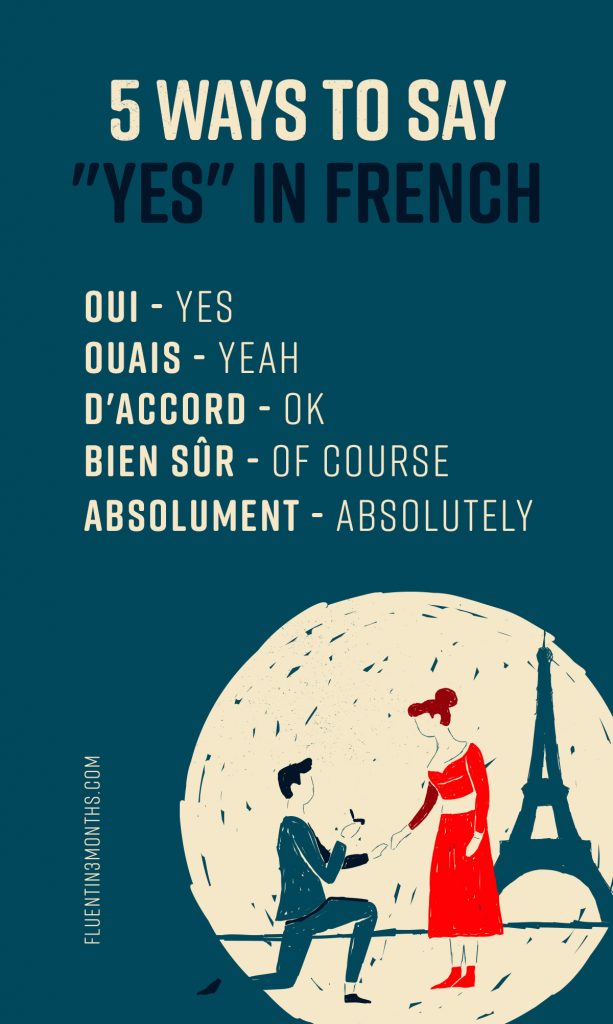
17 Ways to Say "Yes" in French (2024)

How to Say Of course in French Clozemaster
We’ve Looked At 33 Unique Expressions, Covering Everything From Casual To Formal Ways To Agree.
Duolingo Isn’t Just Adding A Couple Of Random Languages.
Let’s Cut To The Chase.
You Can Now Learn French, Japanese, Mandarin, And More In Your Own Language, Which Means No More Struggling With Confusing Translations.
Related Post: